Homeowner’s Guide to Irrigation System Seasonal Maintenance
Twice-a-year irrigation service can prevent freeze damage, high water bills, and dead spots. Here’s what to expect from spring startups and fall blowouts.
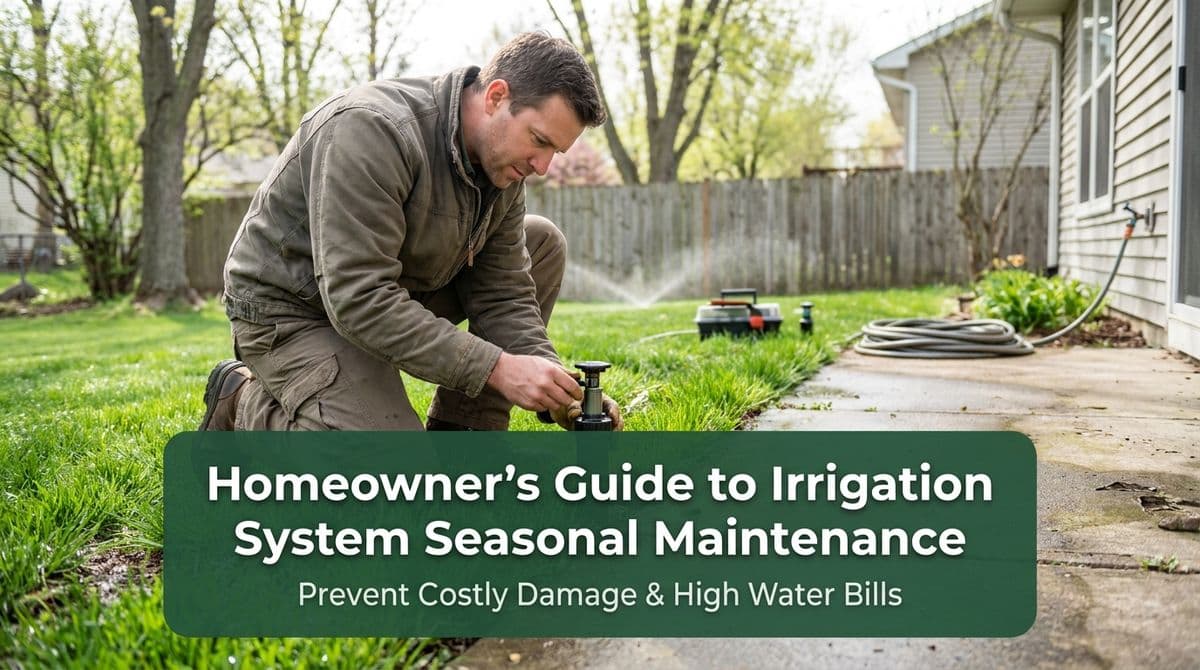
Why Seasonal Irrigation Maintenance Really Matters
We recently got a call from a homeowner — we’ll call him Brian — who had a sprinkler system installed about a year ago by another company. He told us he was unhappy with their service and asked a simple question: could we take over turning the system on in spring and winterizing it in fall?
We told Brian what we tell a lot of folks in his situation: yes, we can — and it’s absolutely worth doing these visits the right way. We typically charge around $150 for a fall blowout/winterization and about $50 for a spring startup, with any repairs priced separately depending on what we find.
That conversation is a perfect example of why seasonal irrigation maintenance isn’t something to skip or rush. A little professional attention twice a year can save you thousands in repairs and water bills.
Spring Startup: More Than Just “Turning It On”
When we come out in spring, we’re not just flipping a valve and leaving. A proper startup protects your system from hidden winter damage and sets your lawn up for a healthy season.
Here’s what we typically do on a spring visit:
- Slowly pressurize the system so we don’t shock pipes, fittings, or backflow devices.
- Walk each zone and check for cracked heads, broken risers, or fittings that might have split over winter.
- Adjust spray patterns so you’re watering grass, not sidewalks, driveways, or the side of your house.
- Check for leaks or soggy spots that suggest underground line damage.
- Test the controller, set seasonal run times, and make sure the rain sensor (if you have one) actually works.
The goal is to catch issues while they’re small. A $10 nozzle or $30 head swap in March is a lot cheaper than a surprise water bill or a flooded flower bed in July.
Fall Winterization & Blowout: Protecting Against Freeze Damage
In our area, we watch the forecast closely. When we see those first nights dropping into the 20s, it’s time to move on winterization — ideally before the hard freeze hits. With Brian, for example, we’d aim for his blowout in the third or fourth week of fall, right before the serious cold arrives.
Here’s what a typical winterization visit includes:
- Shutting down the water supply to the irrigation system.
- Using a compressor to blow out all zones so there’s no water left in the lines, valves, or heads that can freeze and crack.
- Protecting the backflow preventer and any exposed piping from freeze damage.
- Powering down or setting the controller to a safe winter mode.
If this isn’t done correctly, you can end up with:
- Cracked backflow devices (often a few hundred dollars to replace).
- Split underground lines you can’t see until spring.
- Leaks that show up as random wet spots and wasted water.
Compared to those repair costs, that $150 winterization visit starts to look like pretty cheap insurance.
How Often Should Irrigation Maintenance Be Done?
For most homeowners, we recommend a minimum of two professional visits per year:
- Once in spring for startup, inspection, and adjustments.
- Once in fall for blowout and winterization.
If you have a complex system, a lot of landscaping beds, or pressure/coverage issues, adding a quick mid-summer checkup can be helpful. But those spring and fall visits are the non-negotiables for keeping everything safe and efficient.
What Can Go Wrong If It’s Not Done Right?
We often meet new customers after something has already gone wrong. Here are some of the most common issues we see when systems aren’t properly maintained:
- Freeze damage from water left in pipes, valves, or backflow devices.
- High water bills from undetected leaks or misdirected heads watering pavement.
- Dry patches or dead plants because zones aren’t covering properly or the schedule isn’t set for the season.
- Flooded areas when a tiny crack turns into a major break after months of pressure.
Almost all of these are preventable with a careful seasonal check and a bit of proactive repair work.
Signs Your Current Irrigation Provider Isn’t Doing a Good Job
Brian reached out to us because he felt his original installer wasn’t taking care of the system properly. If you’re wondering the same thing, here are some red flags we see a lot:
- The technician is only on-site for a few minutes and doesn’t walk the yard while zones are running.
- You’re never shown or told what was checked, adjusted, or repaired.
- You keep seeing dry spots, overspray, or obvious leaks right after “service.”
- They don’t talk about timing visits around the first hard freeze in fall.
- Every visit turns into a surprise bill with no clear explanation of parts and labor.
A good provider should act like a partner for your lawn, not just someone who flips a switch and sends an invoice.
What to Expect During a Service Visit (and Typical Costs)
When we schedule an irrigation visit, we like homeowners to know exactly what to expect, both in terms of process and budget.
Typical Service Flow
- Walkthrough & questions: We ask about any problem areas you’ve noticed.
- Zone-by-zone check: We run each zone, walk the yard, and make adjustments or minor tweaks on the spot.
- Repairs as needed: If we find broken heads, leaks, or wiring issues, we’ll explain the problem, give you options, and get approval before doing work.
- Controller setup: We set or refine your schedule based on your yard, season, and local conditions.
Typical Cost Ranges
- Fall blowout/winterization: around $150 for most residential systems.
- Spring startup: around $50, plus any repairs or replacement parts if needed.
- Common add-ons: Replacement heads, nozzles, or minor line repairs can range from a few dollars in parts to a couple hundred for larger issues.
We always aim to catch small problems during these visits, so you’re not surprised by bigger repairs or sky-high water bills later.
Ready to Get Your System on a Seasonal Schedule?
If you’re like Brian and feeling unsure about how well your irrigation system is being cared for, a professional spring startup and fall blowout are a smart place to start. With just two well-timed visits a year, we can help protect your investment, keep your lawn healthier, and prevent those costly surprises that always seem to show up at the worst possible time.
Whether your system is brand new or has been in the ground for years, we’re here to make sure it runs the way it should — season after season.